Showing posts with label Kameny. Show all posts

Wednesday, December 29, 2010

1961: Kameny Supreme Court petition regenerated the gay civil rights movement

In 2011, we celebrate 50 years of militant and successful gay civil rights in Washington DC and nationally.

Dr. Franklin E. Kameny laid the philosophical foundation for a new militant self-affirming homosexual civil rights movement with the submission of his petition for a writ of certiorari on January 27, 1961.

With occasional outbursts of anger, Kameny sets out in seventy plus pages a new radical assertion of the normalcy of homosexuality. Kameny asserts the innate right of all homosexuals to ALL civil liberties granted by the constitution of the United States Constitution.


In sentences ringing with indignation, Kameny wrote of homosexuals in 1961

"This is a group comparable in size to the Negro minority, and roughly the same order of magnitude as the Catholic minority, a group some 2 1/2 times the size of the country's Jewish minority and equivalent to the world's Jewish population. It is a group that has borne and is bearing the brunt of a persecution and discrimination of a harshness and ferocity at least as severe as that directed against these other minorities, but which persecution instead of being mitigated and ameliorated by the government's attitudes and practices has instead been intensified by them ..."

Kameny's anger at overreaching bureaucrats' imputations of immorality finds voice in the writ where Kameny declares

"Petition asserts, flatly, unequivocally, and absolutely uncompromisingly that homosexuality, whether by mere inclination or overt act, is not only not immoral but that, for those choosing voluntarily to engage in homosexual acts, such acts are moral in a real and positive sense, and are good, right, and desirable socially and personally."

In less than two months, on March 17, 1961, the US Supreme Court unanimously declined to review Kameny's petition.

The decision stoked fires of political determination already lit in the 38 year old Kameny and 23 year old Jack Nichols, whom Kameny had met the previous autumn and who shared Kameny's views. Meeting over the summer of 1961, they organized a militant new civil rights organization to assert and defend the rights of homosexuals nationally and locally: the Mattachine Society of Washington.


Washington's Mattachine introduced itself to the world, and most particularly to the federal government, on November 15, 1961.

Wednesday, December 10, 2008

DC's Kameny Historic Site

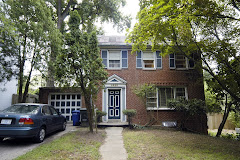
It couldn't be more historic or prominent in LGBT civil rights history: 5020 Cathedral Avenue NW, just a couple of blocks up the hill from MacArthur Boulevard in the Palisades -- is Frank Kameny's home and office.

This is where the self-affirming slogan of the Sixties' gay civil rights campaigns, GAY IS GOOD, was born. This is also where discussions and planning for regional and national gay civil rights organizations went on, where picketing plans were made, where campaigns against civil service and military discrimination were launched, and where the first campaign of an 'out' gay man for Congress was hatched.

Kameny moved there in 1962, from his 4th floor walkup on 18th St NW where he lived on 20 cents a day after being fired from his government job, renting at first and later buying the house. That's it there in the column on the right of this blog page.

The year before he moved to Cathedral Avenue, Kameny and Jack Nichols started the Mattachine society of Washington and completely turned the somewhat reserved world of homophile rights on its head with picketing, in-your-face legal battles, interviews (print, radio, and TV), and taking on the federal government, the psychiatrists' professional organization, and the religious community.

The little neo-colonial house with the patterned blue and white trim was at the center of national and local campaigning for gay civil rights from the early 1960s to the mid-1970s. The upstairs bedroom overlooking the front yard (under Kameny's distinctively patterned shingles) has been Dr. Kameny's office for years. Here he met with members of the local Mattachine Society, with leaders of other gay civil rights groups, and with friends in the movement.

Forty-six years after Kameny moved in and forty-seven years after he stood up to federal employment discrimination and launched a militant campaign for equal rights for homosexuals, the little house at 5020 Cathedral NW, Washington, DC deserves preservation and recognition as a site at the center of a minority's assertion of equality and rights.

Rainbow History has nominated the Kameny home and office as a historic site. The District of Columbia's Historic Preservation Review Board will decide whether to accept that nomination on January 22, 2009. To read the nomination check out the pdf file at www.rainbowhistory.org/5020Cathedral.pdf.

Saturday, November 29, 2008

Visible Past

Visibility builds awareness, which can lead to understanding.

Buildings and sites connected to historical movements and events create a physical connection with the historical narrative. The sites of queer history, where gay men, lesbians, bisexuals, and transgender people have campaigned for civil rights and built communities, are often invisible to the larger community.

Recognizing these sites, achieving historic preservation status for them, and making them visible marks the queer community as a people with a history that cannot be ignored. It also preserves that history as part of the national story of achieving minority rights and acceptance. For current and future generations, preservation ensures that the physical locations remind ourselves and others of the struggles and creates a visceral connection to that story.

Queer physical history is largely urban. As such it often disappears beneath developers bulldozers. In Washington, DC an entire community of entertainment sites, dating from 1970, fell to bulldozers building a new baseball stadium in 2006. In Los Angeles, the two offices of the Mattachine have been replaced by parking and a newer office building. To date only one site, the Stonewall Inn, has been recognized by the National Park Service as worthy of inclusion on the National Historic Landmarks list. A handful of other sites have been recognized locally.

This blog will profile historic sites not yet preserved, examine the
process and hurdles of achieving historic site recognition and preservation, and advocate for heightened preservation campaigning by queer historical and archival organizations, professional archivists and historians, and the public.

The photo on the right is the home and office of Dr. Franklin E. Kameny, the father of militant gay activism from 1961, which has been nominated by Rainbow History for historic site recognition in Washington, DC (more on that later).