November 16th, 2009 the sun set on the Washington Blade, Washington DC's venerable newspaper of record for the queer community. Forty years and 41 days since Nancy Tucker and Art Stone launched the periodical on October 5, 1969, Window Media's misadventures sank the paper. The venerable local and national institution is lost. But the good news is that its staff are working to recreate again under another name in an employee-owned venture.
But that won't save our history!
Now that the entire Window Media organization is in receivership and owned largely by the Small Business Administration, the Blade's collection of forty years of photos (beginning with Nancy Tuckers' photos) is in jeopardy and may be lost to the community. Forty years of the company's records, topical files, and journalists' files are in equally serious jeopardy.
Historic preservation is about preserving memories. Certainly preserving the documentary and photographic archives is as, if not more important, than preserving sites in our history.
What will our queer community - local and national - do to ensure that those archives are not lost, dispersed, or junked by the Small Business Administration?
Showing posts with label Washington DC. Show all posts
Showing posts with label Washington DC. Show all posts
Tuesday, November 17, 2009


Saturday, December 6, 2008
It's About TIME -- and Fairness -- and Making the Case.
Is our history too 'young'?
Many of the historic sites of the queer civil rights campaigns and of community building date from the 1960s and 1970s. To those of us who are still struggling for our equal rights, that seems far in the past. To the National Park Service (NPS), whose rule-making guides most state and local preservation authorities, historic sites younger than 50 years (since they became significant) aren't historic. Yet.
The 50 year rule is a major hurdle for preserving our sites. Although the NPS provides guidelines for submitting sites younger than fifty years, those guidelines require that a site be of extraordinary significance and be widely regarded in the history community as significant. It's no surprise then that no queer historic sites other than the Stonewall Inn have made it on to the National Register or the National Historic Landmarks list.
At the recent National Trust for Historic Preservation conference in Tulsa, I made the point that since most queer historic sites are urban, they stand a good chance of being destroyed or altered beyond recognition before they are eligible for preservation. Two of the early office sites of California's Mattachine Society and Foundation have already disappeared. Here in Washington, DC an entire entertainment district, with roots in the early 1970s, was demolished to build a baseball stadium for a cellar-dwelling baseball team.
Not surprisingly, many in the audience with concerns about second wave feminist sites, Latino sites, African-American and Native American sites chimed in with the same concern. African-American civil rights sites have had somewhat more recognition, despite the 50 year rule, but you have to wonder what is happening with the sites of the Black Power movement and community development that date from the late 1960s and the 1970s.
Though NPS is resistant, there are hopes for change and for working with the rules. After all the Stonewall Inn was recognized as a national landmark just 30 years after the events that made it significant. The onus of responsibility lies first, and foremost, with the queer community, its archives and historical associations, to make the case and submit the sites for local, state, and -- one hopes -- national recognition. If we don't start the process, the rules at NPS can't be challenged and changed.
Queer communities across the country have the primary responsibility for starting the preservation process for their historic sites.
Many of the historic sites of the queer civil rights campaigns and of community building date from the 1960s and 1970s. To those of us who are still struggling for our equal rights, that seems far in the past. To the National Park Service (NPS), whose rule-making guides most state and local preservation authorities, historic sites younger than 50 years (since they became significant) aren't historic. Yet.
The 50 year rule is a major hurdle for preserving our sites. Although the NPS provides guidelines for submitting sites younger than fifty years, those guidelines require that a site be of extraordinary significance and be widely regarded in the history community as significant. It's no surprise then that no queer historic sites other than the Stonewall Inn have made it on to the National Register or the National Historic Landmarks list.
At the recent National Trust for Historic Preservation conference in Tulsa, I made the point that since most queer historic sites are urban, they stand a good chance of being destroyed or altered beyond recognition before they are eligible for preservation. Two of the early office sites of California's Mattachine Society and Foundation have already disappeared. Here in Washington, DC an entire entertainment district, with roots in the early 1970s, was demolished to build a baseball stadium for a cellar-dwelling baseball team.
Not surprisingly, many in the audience with concerns about second wave feminist sites, Latino sites, African-American and Native American sites chimed in with the same concern. African-American civil rights sites have had somewhat more recognition, despite the 50 year rule, but you have to wonder what is happening with the sites of the Black Power movement and community development that date from the late 1960s and the 1970s.
Though NPS is resistant, there are hopes for change and for working with the rules. After all the Stonewall Inn was recognized as a national landmark just 30 years after the events that made it significant. The onus of responsibility lies first, and foremost, with the queer community, its archives and historical associations, to make the case and submit the sites for local, state, and -- one hopes -- national recognition. If we don't start the process, the rules at NPS can't be challenged and changed.
Queer communities across the country have the primary responsibility for starting the preservation process for their historic sites.
Saturday, November 29, 2008
Visible Past
Visibility builds awareness, which can lead to understanding.
Buildings and sites connected to historical movements and events create a physical connection with the historical narrative. The sites of queer history, where gay men, lesbians, bisexuals, and transgender people have campaigned for civil rights and built communities, are often invisible to the larger community.
Recognizing these sites, achieving historic preservation status for them, and making them visible marks the queer community as a people with a history that cannot be ignored. It also preserves that history as part of the national story of achieving minority rights and acceptance. For current and future generations, preservation ensures that the physical locations remind ourselves and others of the struggles and creates a visceral connection to that story.
Queer physical history is largely urban. As such it often disappears beneath developers bulldozers. In Washington, DC an entire community of entertainment sites, dating from 1970, fell to bulldozers building a new baseball stadium in 2006. In Los Angeles, the two offices of the Mattachine have been replaced by parking and a newer office building. To date only one site, the Stonewall Inn, has been recognized by the National Park Service as worthy of inclusion on the National Historic Landmarks list. A handful of other sites have been recognized locally.
This blog will profile historic sites not yet preserved, examine the process and hurdles of achieving historic site recognition and preservation, and advocate for heightened preservation campaigning by queer historical and archival organizations, professional archivists and historians, and the public.
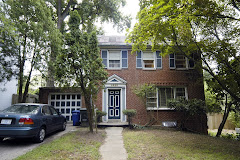
The photo on the right is the home and office of Dr. Franklin E. Kameny, the father of militant gay activism from 1961, which has been nominated by Rainbow History for historic site recognition in Washington, DC (more on that later).
Buildings and sites connected to historical movements and events create a physical connection with the historical narrative. The sites of queer history, where gay men, lesbians, bisexuals, and transgender people have campaigned for civil rights and built communities, are often invisible to the larger community.
Recognizing these sites, achieving historic preservation status for them, and making them visible marks the queer community as a people with a history that cannot be ignored. It also preserves that history as part of the national story of achieving minority rights and acceptance. For current and future generations, preservation ensures that the physical locations remind ourselves and others of the struggles and creates a visceral connection to that story.
Queer physical history is largely urban. As such it often disappears beneath developers bulldozers. In Washington, DC an entire community of entertainment sites, dating from 1970, fell to bulldozers building a new baseball stadium in 2006. In Los Angeles, the two offices of the Mattachine have been replaced by parking and a newer office building. To date only one site, the Stonewall Inn, has been recognized by the National Park Service as worthy of inclusion on the National Historic Landmarks list. A handful of other sites have been recognized locally.
This blog will profile historic sites not yet preserved, examine the process and hurdles of achieving historic site recognition and preservation, and advocate for heightened preservation campaigning by queer historical and archival organizations, professional archivists and historians, and the public.
The photo on the right is the home and office of Dr. Franklin E. Kameny, the father of militant gay activism from 1961, which has been nominated by Rainbow History for historic site recognition in Washington, DC (more on that later).
Subscribe to:
Posts (Atom)

 Posts
Posts